
Share the Road, Look Twice, and Ride Prepared
Every May, Motorcycle Safety Awareness Month is a chance to talk about something that really should be top of mind all year. Motorcyclists are out on the same roads as the rest of us every single day — commuting, running errands, and making the same trips most of us make in a car. The difference is that a motorcycle offers far less protection in a collision and is far easier to overlook in traffic. That combination is what makes shared awareness so important, and it is why the habits drivers and riders build on a daily basis matter more than any single awareness campaign.
Motorcycle Safety Guide
Hover over each card to see the full guide.
Five habits that protect motorcyclists every time you get behind the wheel.
Hover to Learn More
- Shoulder-check before every lane change, not just mirrors
- Signal early and give riders time to see and react
- Leave extra following distance behind motorcycles
- Slow down at intersections and scan both directions for bikes
- Give motorcyclists the full width of their lane
Five riding habits that reduce your risk every time you are on the road.
Hover to Learn More
- Ride sober — alcohol was a factor in 40% of single-vehicle motorcycle fatalities in 2024
- Avoid speeding — 37% of riders killed in 2024 were above the speed limit
- Stay out of drivers’ blind spots, especially near larger vehicles
- Use both brakes smoothly — abrupt braking is a leading cause of single-vehicle crashes
- Increase following distance — you need more stopping room than a car does
What It Actually Takes to Ride Safely — Not Just Legally
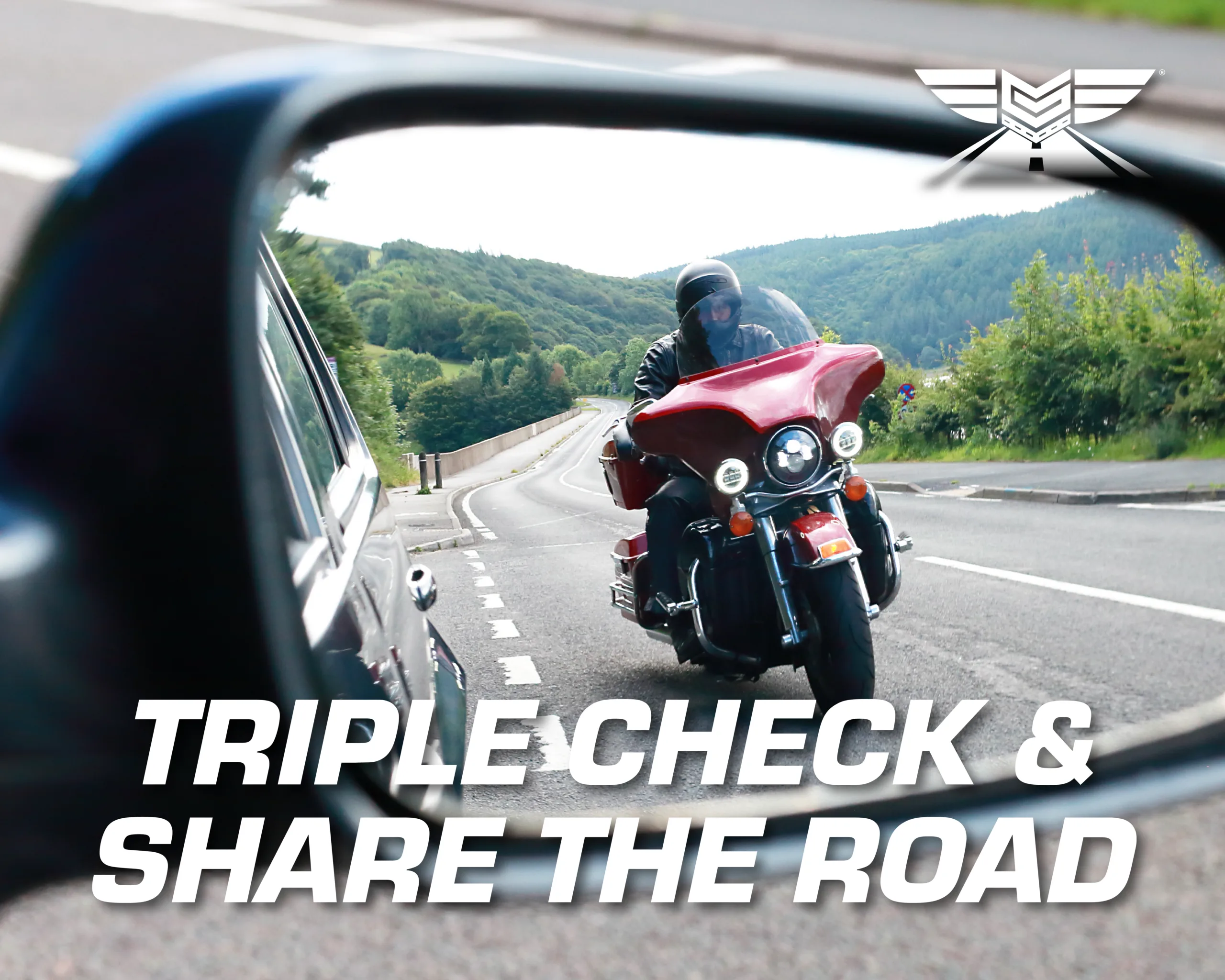
Motorcycle safety is never just the rider’s responsibility. Drivers play an equally important role every time they get behind the wheel. Because motorcycles are smaller and lower-profile than other vehicles, they regularly disappear into blind spots that most drivers are not actively scanning for. Checking mirrors once is a habit — checking them twice, then adding a full shoulder look before any lane change, is what actually catches a rider before a collision becomes inevitable. Beyond blind spots, drivers need to give motorcyclists a full lane, signal with enough lead time for a rider to respond, and resist the urge to follow too closely. A motorcycle can brake significantly faster than a car, and a driver who is not leaving room simply will not have time to react.
For riders, the responsibility runs just as deep. Riding safely goes well beyond following posted speed limits — it is about managing an environment where most of the risk comes from factors outside your control. The most effective thing a rider can do is develop strong situational awareness: knowing where every surrounding vehicle is, anticipating driver behavior before it happens, and always having a mental exit route in case something goes wrong. Lane positioning matters too — choosing where you sit within your lane directly affects how visible you are to drivers and how much reaction time you have. Staying out of blind spots, wearing high-visibility gear, and keeping headlights on at all times are not optional extras. They are the habits that experienced riders credit most for staying upright mile after mile.
Guardian Fleet Services Provides 24/7 Motorcycle Towing and Recovery
Even the most prepared rider can end up stranded — a mechanical failure, a flat tire, or a road incident can happen without warning. When it does, the priority is getting to safety quickly and getting the right help on the way. Guardian Fleet Services operates around the clock across 50+ terminal locations in Florida, Georgia, Indiana, Kentucky, Tennessee, Texas, and Ohio, with teams trained specifically for motorcycle recovery.
- Move away from active traffic to a safe location whenever possible
- Call 911 first if there are injuries or an active hazard on the road
- Contact Guardian Fleet Services for professional towing and recovery support
(866) 475-9001 | Find Your Nearest Location
We All Share the Road — and We All Share the Responsibility
Road safety is not a one-sided obligation. Drivers are responsible for checking their blind spots, giving motorcyclists proper space, and staying off their phones. Riders are responsible for being visible, riding prepared, and operating within their limits. When both sides hold up that agreement, the road gets safer for everyone — not just motorcyclists.
Frequently Asked Questions About Motorcycle Safety and Roadside Assistance
How much space should I give a motorcycle on the road?
A motorcycle is entitled to a full lane — not the edge of one. Riders shift their position within the lane regularly to avoid road debris, surface changes, and wind from passing vehicles, and they need that full width to do so safely. Following distance should be at least the same as you would give a car, if not more, since motorcycles can decelerate significantly faster than most drivers expect.
What safety gear should motorcyclists wear?
Every ride, regardless of length or conditions, calls for a DOT-approved helmet, an abrasion-resistant jacket, full gloves, and over-the-ankle boots. High-visibility or reflective gear is an important addition because being easy to spot is itself a form of protection — it gives drivers more time to see a rider and respond before a situation becomes dangerous.
Does Guardian Fleet Services provide motorcycle towing?
Yes — Guardian Fleet Services provides professional towing and roadside assistance for motorcycles across Florida, Georgia, Indiana, Kentucky, Tennessee, Texas, and Ohio, 24 hours a day, 7 days a week. Call (866) 475-9001 or find your nearest location here.
Need Towing or Roadside Assistance?
Professional towing and 24/7 emergency recovery across the Southeast.